10 Best Peanuts Comics Featuring Snoopy's Brother Spike, Ranked
转载声明:本文转载自 CBR,版权归原作者及原媒体所有。
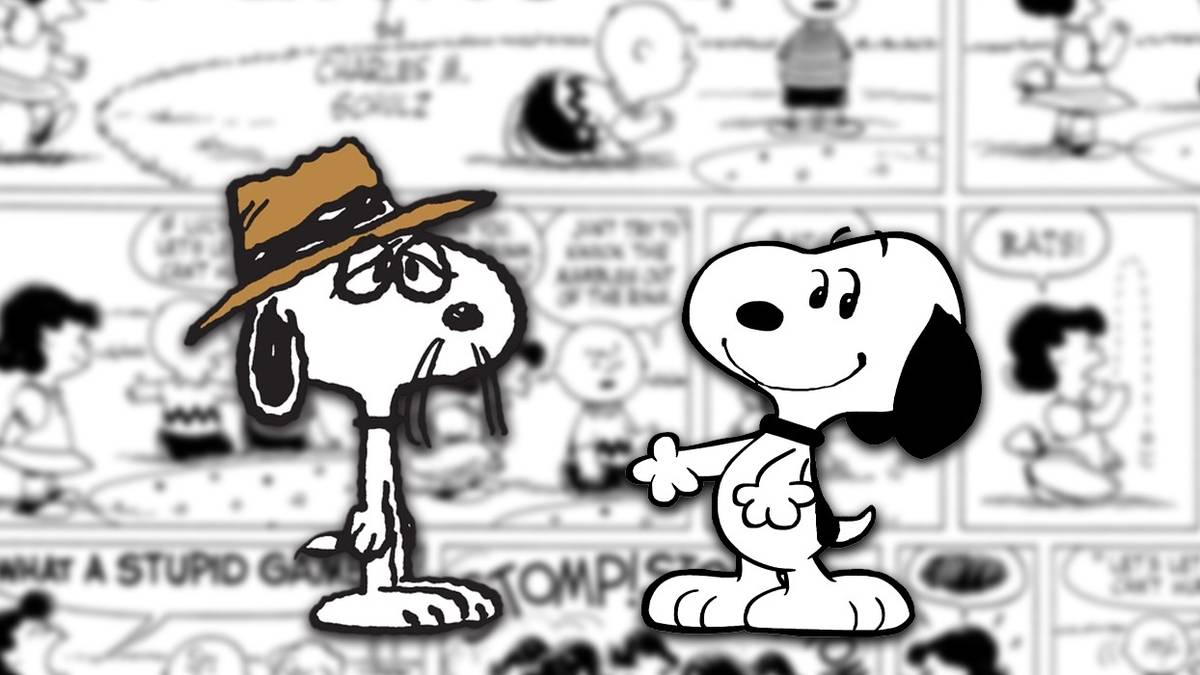
While several of Snoopy’s family members have appeared in Peanuts comics, his brother Spike is by far the most famous one. Having appeared in over three hundred strips between 1975 and 2000, Peanuts creator Charles Schulz often used Spike to explore the themes of boredom, alienation, and excruciating loneliness.
Spike was originally conceived as Snoopy’s free-spirited brother who lived among a tribe of coyotes in the desert near Needles, California. After being banished from the tribe, Spike lived alone and talked to a cactus who was his only friend. Spike is one of the most underrated characters in Peanuts . The best Spike strips are either hilariously dark and depressing, significant to his character’s history, or both.
While this probably made some newspaper readers chuckle when it was first printed, it isn’t as funny in retrospect. The entire punchline revolves around Spike’s appearance and how similar yet different he looks compared to his brother Snoopy. Unlike Snoopy, Spike is very skinny because he lives in the wild. Spike has a mustache and a distinctive hat. Decades later, in the late 1990s, Spike began wearing Mickey Mouse shoes.
Many sources will cite this strip as Spike’s first appearance, but this isn’t technically accurate. The previous Peanuts strip, published on Aug. 12, 1975, depicts Spike’s nose peeking out of Snoopy’s doghouse . Nonetheless, the Aug. 13, 1975 strip was the first full-bodied appearance of Spike. It was the first time Charles Schulz drew the character from head to toe, and because of its importance, it had to be included on this list. It should also be noted that the first reference to the character of Spike was in the Aug. 4, 1975 strip, when Charlie Brown showed Snoopy a letter from Spike, telling him that Spike is coming to visit.
The seeds of what Peanuts fans would later understand about Spike were already established in his first storyline. However, it’s notable that Snoopy’s initial perception of his brother differed from reality. Despite Spike being an outsider dog among a tribe of coyotes who’d later banish him, Snoopy first speculated that he was the tribe’s leader. Additionally, Snoopy threatened the cat next door, World War II , who was an off-screen, ongoing character in the Peanuts comics of the 1970s. Snoopy told World War II that he’d better watch out when his rough and tough brother arrives in town. This threat proved to be empty and delusional, as Spike was just as afraid of the menacing cat as Snoopy was.
It should be noted that even if Spike wasn’t as brave or put together as Snoopy believed him to be, he originally had a more free-spirited and upbeat personality. In another storyline, published in 1977, Snoopy’s fiancé dumped him for Spike, whom she found more charming, only for her to leave Spike too. Before Spike’s excommunication in 1983, he seemed mostly happy and was never delirious or on the brink of madness. Nevertheless, Snoopy still had an amusingly high regard for and misperception of his doofus brother, which was relatable to anyone who’s ever had rose-colored glasses for a friend or loved one.
Spike was kicked out of the tribe of coyotes in a storyline originally published during Feb. and March 1983. Despite previously being Spike’s found family, they waged war on him, ganging up on him in rubber band fights. After Snoopy received a letter from Spike alerting him that he was in trouble, he gathered his Beagle Scouts, a group of nine yellow birds he leads in outdoor adventures, and traveled to Needles.
After Snoopy and the Beagle Scouts rescued Spike, everything changed. For the rest of the Peanuts comic strip, Spike lived alone in the desert, talked to a cactus, and did anything he could to stay busy and sane. This strip was a part of the first full-length storyline to feature Spike after his excommunication, and it set the tone for what was to come. Snoopy no longer laughed at Spike’s zany antics or overestimated him. When Snoopy called Spike embarrassing, it was a successful punchline because Peanuts readers were also beginning to feel sorry for him.
This was one of the earliest strips in which Charles Schulz depicted Spike alone, talking to a cactus in the desert—and it was a memorable one. Anyone who’s gone too long without a real conversation can attest to how it can start to warp their thoughts and make them feel like they're losing their mind. Henceforth, Spike laughing at his own puns was common in Peanuts .
Spike’s relationship with a thorny cactus is beautifully tragic in a way that could only come from Schultz's creative mind. There’s some indication, especially in the 1990s, that the cactus can hear, in fact, and understand what Spike says to him. This is especially plausible considering that Peanuts comics included a sentient elementary school building that understood what Sally said to him. Either way, it would still be good for Spike to find a warm-blooded creature to talk to about his thoughts and feelings. While Spike writes letters to Snoopy, who genuinely cares and listens, he isn’t physically present in Spike’s daily life.
The theme of loneliness was explored in countless Peanuts strips long before the introduction of Spike. However, loneliness in Spike’s comics feels distinctly different. While Charlie Brown often throws pity parties about being “unloved,” readers can see that his reality is far from bleak. He has supportive friends like Linus, a girl who has a crush on him, Peppermint Patty, his sister Sally, who looks up to him, and a loving father who always makes time for him during visits to the barbershop where he works. These are relatable feelings and common ones for someone experiencing depression, but they’re not reflected in the reality of Charlie Brown’s life. Spike, on the other hand, is pathetic. He has alienated the coyotes who once were his adopted family, is constantly rejected by the women in Needles, and his only friend is a cactus who can’t respond to him.
It seemed as if maybe Charles Schulz started to feel like the suffering Spike was experiencing was getting to be a little too much. A few Peanuts storylines and strips in the late 1990s indicated that there might be hope for Spike after all. In 1997, Spike started wearing little yellow shoes that, according to Spike, were a gift from Mickey Mouse, a wealthy friend in Hollywood. Also, Snoopy suggested that his other brothers, Andy and Olaf, go to Needles to live with Spike. Andy and Olaf happily obliged, but Spike still couldn't catch a break. In the last few years of Peanuts , the two brothers wander around cities, snow-covered terrain, and the desert where Spike lived but never successfully found him.
1984 was the first year in which almost every month had a Peanuts strip featuring Spike. He taught an aerobics class to immobile cacti and began to express an existential fear of, rather than camaraderie with, the coyotes he heard howling at night. Most memorably, in several strips throughout 1984, Spike was the sole member of the Local Cactus Club. This strip was one of the first to introduce the idea, and it perfectly encapsulates the dry humor in many of the best Spike comics. The only Spike strips that surpass these are either more notable for his legacy or more effectively showcase elements of his lifestyle or personality.
Interestingly, despite 1983 and 1984 being pivotal years for Spike’s character development, You Don’t Look 35, Charlie Brown , which celebrated Peanuts strips from 1950 until 1985, didn’t include a single Spike appearance. However, it should be noted that Peanuts: A Golden Celebration , which is the best and most definitive Peanuts comic strip collection to date, included several Spike strips from the 1980s and 1990s. This suggests that when A Golden Celebration was published in 1999, Spike was considered a more important Peanuts character in the eyes of Charles Shultz and book publishers.
Peanuts had many profound and memorable quotes . This included idioms like Snoopy saying, “A watched supper dish never fills,” or Linus saying, “You can’t survive by sucking the juice out of a wet mitten.” Spike fans finally got one of these idioms from the character eight months before Peanuts ended. While most people haven’t talked to tumbleweeds or a cactus, it was oddly relatable when Spike worded it like this. Many people have found a good listener in an unexpected place while also being disappointed by someone they found to be a bad listener.
You can talk to a cactus, but a tumbleweed won't listen.
Even as many other Peanuts characters faded into obscurity , the frequency of Spike's appearances only increased as the years progressed. In the final years of Peanuts , 1999 and 2000, Schultz wrote and drew more strips about Spike than almost any other character. Even if he isn't remembered nearly as much as Charlie Brown's depressed and anxious musings, Spike deserves his place in the zeitgeist, too.
Many Peanuts fans fondly remember learning to read through the comic strip collections their parents bought for them. Revisiting these comics as a teenager or adult can sometimes result in a big, hearty laugh at a joke they didn’t understand as a small child. While this probably isn’t a moment that would garner such a laugh, it can certainly result in a gasp or a startle.
Charles Schulz, who drew comics about depression and anxiety for fifty years, must have known what he was doing when he drew this strip. The punchline works as a joke about a dog on a leash, but it could also be alluding to suicide. It's a dark strip that reflects on Spike's mental health.
This strip perfectly encapsulates the dry humor that's often in Spike comics. It’s laugh-out-loud funny in a way that only a Spike strip can be in Peanuts . It’s dark, twisted, and yet somehow sentimental at the same time. After all, this was one of the few instances of Spike smiling. It also highlights the monotony of Spike’s lifestyle—he’s been sitting next to the same rock since last Christmas.
There were several other Peanuts Christmas strips featuring Spike in the 1990s. Spike put Christmas tree lights on the cactus on multiple occasions and also attempted to decorate it with a Christmas tree star. However, because Spike wasn’t tall enough to put the star on the top of the cactus, it looked like a sheriff’s badge instead. Christmas comics about Spike are a good reminder to call your friends and loved ones who might not have somewhere to be during the holidays.
This storyline has already been referenced on this list, and for good reason. It was the first time Peanuts fans got a true sense of Spike’s personality. When focusing solely on Spike’s strips and ignoring the rest, this is the story’s inciting incident. What Spike did here led to his exile from the coyote tribe, forcing him to live alone in the desert. This event shaped Spike’s lifestyle, which consists of talking to a cactus and finding ways to stave off boredom for the rest of Peanuts history. It’s why Spike only sees another warm-blooded creature when he goes to Needles to play video games and hit on women or travels out of town to visit Snoopy.
Being important to the character’s lore is reason enough to appear on a list of the best Spike comics. However, this strip earns the top spot because it has the added benefits of being among the funniest and a fantastic showcase of Spike’s personality. The idea of “ocean view condominiums” in the desert is so ridiculous that it’s laughable. However, because Spike is such a blockhead, he earnestly believed that the eyesight of his former coyote friends was good enough to see the ocean from the property site. This strip shows that Spike’s loneliness isn’t due to being a fuss budget like Lucy or ignoring people who care about him, like Schroeder. Spike is lonely because he alienates others in ways he doesn’t fully understand.
Charlie Brown, an everyman plagued by self-doubt, navigates life's challenges with his loyal dog Snoopy and friends like the bossy Lucy, philosophical Linus, and talented pianist Schroeder. Through everyday adventures and heartfelt moments, the series explores themes of friendship, resilience, and the simple joys of childhood.